
WHEN GOD BELLOWED SILENCE - Lent 4#
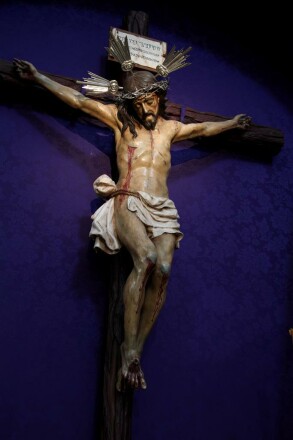
It’s been called ‘the Fifth Gospel’. Psalm 22 is unparalleled amongst the psalms in its prophetic portrayal of the suffering of the Lord Jesus on the cross. At times this ‘shadow of the cross’ shines with breathtaking brightness as it points us forward to our Lord’s inconceivable hours of desolation.
The Psalm tells of David’s journey from despair to deliverance. He begins by lamenting his condition, particularly his God forsakenness (vv 1–11). Then in verses 12–21 he recounts his sorrows, leading him to pray. Finally, he rejoices in the certain anticipation of deliverance (vv 22–31).
When trials or suffering come upon us one of the hardest things to deal with is the tension between what we believe and what we’re experiencing. This is the conflict in David’s spirit. God’s people have always suffered, but they have maintained their confidence that God knows what they’re going through, and will act to save them. God had proved this again and again: ‘In you our fathers put their trust; they trusted and you delivered them’ (v 4). But right now in David’s life and his experience doesn’t match each other. He cries out to God, repeatedly, and is met with silence.
Then, to add insult to injury, those around Him look at Him with disdain, insulting Him, and mocking His faith in God (vv 6–8). David reminds God that from his birth he has been taught to trust in the Lord. Now, in his moment of greatest need, he pleads
with God: ‘Do not be far from me’ (v 11).
While hanging and dying on the cross, Psalm 2 was in the forefront of Jesus’ mind. David’s sense of divine abandonment was now being experienced by his own descendant, but in a much deeper and more horrifying way than David could have imagined.
Remarkably, Psalm 22 also prophesies many of the details of the crucifixion. Let God rescue Him now if He wants Him’ (Matthew 27:43). But it is in Jesus echoing David’s sense of abandonment that Psalm 22 speaks most profoundly.
Of course, we must not misunderstand what Jesus was going through as His cry pierced the darkness (Matthew 27:45–46). The Trinity was not being torn apart. He’d repeatedly preached that He would die and rise again. At the same time, none of that should diminish the horror of what Jesus was going through. If I lose my wallet I’m frustrated. If I lose my pet dog I’m upset. If I lose a close friend I’m heartbroken. If I lose my wife, who has been my constant lover and companion for over 30 years, the agony would be deep and abiding.
But if I were to lose a Father that I’d had a perfect love relationship with from eternity, the pain would be beyond words. Jesus’ sorrow here was real. Jesus’ sense of God’s abandonment was genuine.
Jesus bore the wrath of God for us. God didn’t kill Abraham for lying about his wife. He didn’t execute Lot for drunkenness and incest with his daughters. He didn’t have David and Bathsheba stoned for their adultery. No, God put those stones aside until
the day when he would hurl them at someone else.
In those unbelievably dark hours Jesus bore the punishment for the sins of Abraham, Lot, David, you and me.
Jesus cried out, ‘My God, my God why have You forsaken me’ so that we may never be abandoned by God. Jesus experienced the absence of God so that we might enjoy His presence for eternity.